5 REASONS GRADUATE SCHOOL IS THE ABSOLUTE WORST

 Jenna Perlmutter,TriSight Contributor

Picture1

  1. IT’S BASICALLY LIKE RELIVING YOUR COLLEGE DAYS EXCEPT IN A FIELD YOU ACTUALLY CARE ABOUT
    Grad school cuts right to the chase. You’re not required to take the ‘fluff’ GenEd classes you had to take in your undergrad. Instead, your program offers classes that are in the realm of your interests. Yes, there is plenty of homework and readings but it’s not nearly as dreadful as
    undergrad because you’re mastering the skills in a field that you’re passionate about. You’re paying to learn about a topic from esteemed professionals that genuinely want you to succeed.


  1. YOU CAN PROLONG DECIDING WHAT YOU WANT TO DO WITH YOUR LIFE
    Whoever graduates from college knowing exactly what they want to do in their life cannot be trusted. Sure, there are many exciting jobs and opportunities out there but it takes working for a few different jobs to truly learn what you do and
    don’t enjoy doing. Grad school prolongs that looming pressure you feel post grad when your family asks what you’re doing with your life. It’s also a wonderful time to take advantage of the classes your university offers that you didn’t have time to take in your undergrad.


  1. YOU SOCIAL CIRCLE EXPANDS
    Let’s be honest. College was a great time to dabble in clubs, intramurals, Greek Life and socialize in class. But six months
    post grad, you’re likely only keeping in touch with a handful of people, which is totally okay because those are the friends you foresee in your wedding one day. In grad school, you’re surrounded by like-minded individuals that are also willing to put the time in to become successful. Your classmates understand all too well the challenges of balancing a busy schedule and the daily contemplation of going to bed by 9p.m.


  1. GRADES DON’T MATTER
    Unless you plan on continuing your education to earn a
    PhD, grades in graduate school don’t really matter. Don’t get me wrong, it’s important to at least maintain the university’s minimum GPA requirement, but it’s more important to focus on getting to know your classmates and networking with your professors. The post-grad job market is highly competitive and employers are not interested in the GPA you maintained throughout graduate school. You probably heard it all the time in your undergrad, but network, network and network. Your professors are well connected in the industry and are likely to connect you with the right people.


  1. YOU’RE INVESTING IN YOUR FUTURE
    While your friends are busy working full-time and earning a steady salary, you’re dedicated to being a student. Some students procure internships or part-time jobs during their program while others commit to being full-time students. Either way, it’s nearly impossible to work a full-time job and you can feel like you’re “behind” compared to your friends that have a regular paycheck coming in. However, investing a few short years to earning a master’s degree sets you up for success for the rest of your life. Upon matriculation, your degree sets you apart in the job market and you always have an advanced degree to fall back on. Not to mention a strong alumni network for life. 

3 reasons why your PR strategies should include social media.

Melissa Lim, TriSight Contributor

In the current digital age, the role of social media is no doubt inevitable in the workplace. Social media does not only change the way we receive information, but also our engagement with each other: how we can immediately stay constantly connected with a click of a button. As social media continues to grow to the biggest information platform and the new content distribution model, PR strategies have to implement themselves into the medium to thin the line between brands and the ever-present consumers online.

That said, let’s take a look at why PR strategies should be implemented in social media.

  1. Social Media helps reach out to a wider audience.
    • Social Media defies age barriers. In 2015, Pew Research Center studied the number of people who are on social networks and resulted in 65% of US adults; And in between 2005 and 2015, users aged between 30-49 increased from 8% to 77%. Chances are, your customers are already online waiting for you to log on.
    • Moreover, each post you make automatically is an opportunity to access both new and old customers. By jumping on the #hashtag trend, your posts could attract customers who are actually interested in similar content, allowing you to reach out to your actual targeted audience.
  1. Social media helps build a personal relationship with customers.
    • One of the best social media features is the two-way communication channel. Most social media platforms now allow you to @mention other brands and comment on posts, building a more personal relationship with each other. This is a good opportunity to connect with your customers and ensure them that no inquires, comments or criticism goes unnoticed, provided a good customer experience for your brand which can drive real results.
  2. Social Media is live.
    • The concept of sharing live videos allows brands to participate in storytelling. The newly innovative ways to share live content with your customers can also enhances your relationship with customers because it allows you to interact in real-time. Unlike pre-recorded videos, the transparency of your brand while sharing live videos can lead to customer trust and loyalty; And when they start liking and sharing your content, you will be one step closer from going viral. Though it is not easy to achieve viral status, social media helps make it possible.

Lessons Learned in My First Year of PR School

Lessons Learned in My First Year of PR School

Daisy O’Neill, TriSight Contributor

I came to USC Annenberg’s School of Communication and Journalism with limited experience in communication or journalism.  In fact, my undergrad major at The University of Missouri was textile and apparel management, which had little to do with communication and a lot to do with clothes, retailers, and fabrics.  I’ve learned everything I now know about PR in the past year, all thanks to the admission board at Annenberg that took a chance on a fashion student.  My first year living in Los Angeles has provided me with plenty of learning experiences, from where to find the nearest green juice to how to navigate the 405 for minimal traffic.  Most importantly though, I’ve learned the foundational skills needed to become an effective PR practitioner.  Some have been more straightforward than others, but understanding all are equally as important to my career path and personal growth.  Here are the most significant things I’ve learned throughout my PR journey.

First, you have to talk the talk.  This applies to several fields, but networking is what really will get you places in the PR world.  Fostering and sustaining relationships is how people transition from positions, learn about opportunities and stay relevant in the business.  An adjunct professor at USC and trailblazer in the industry, Jess Weiner, says “relationships are the currency of business” and I think there is major truth to that.  At both Mizzou and USC, I’ve had opportunities to meet professionals in different industries at countless networking events.  Through attending several of them, I’ve actually found that I’m more successful making these personal connections in more organic ways while meeting people as I go about my day.  Regardless, choose whatever method works best for you and go for it.  Don’t be afraid of the awkwardness, rather, embrace it and let it help you make money moves!

It’s not all glam events and high-profile guestlists.  Sometimes it is! But sometimes it’s not.  What initially attracted me to the PR world was the events side of the business.  As someone who was studying the fashion industry and has always been a big follower of pop culture and lifestyle trends, I always wanted to be inside the exclusive and glitzy parties and shows.  However, though I’ve worked events like that in my short PR career, the majority of public relations is in the day-to-day communications and reputation management of a brand.  I’ve learned that events are incredibly large and detailed tasks that take tons of planning, negotiating, and physical labor.  It wasn’t until I was thrown into the mix, working actual events for brands, that I quickly realized the mental and physical exhaustion that would come with working them – whether it was for 10 or 200 people.  Definitely seize any possibility to get in those events, but make sure you’re prepared for the actual hard work required to put on the program.

Spelling and grammar – it really is important.  We all say we know how important spelling and grammar is, but… do we really?  My first semester at USC, while taking a PR writing class, I was introduced to the level of writing and editing that is expected of communications and journalism students.  There’s a whole set of special rules for those working in communication, called AP style.  It took me a whole semester to learn the very basics of AP style – only scratching its surface.  And no, I definitely have no shame in still referencing my textbook.  At one of my internships, as a media relations intern at BLAZE PR, I was introduced to “The Dirty Towel” analogy.  Picture yourself walking into a super swanky, 5-star hotel.  You’re amazed by the hotel’s beauty, cleanliness, and friendly staff.  You’re shown to your room, where you have an amazing view, full bar, and comfy bed – but then you head to the bathroom.  A used towel is hidden in the corner.  You know it was probably just overlooked by the cleaning service, but it makes you start to question the rest of the hotel.  You think to yourself, “well maybe the view isn’t that great… and the sheets are probably not washed properly… and the front desk worker wasn’t really that accommodating…”  After you see that small mistake, you start negatively viewing other aspects of the hotel until you maybe have convinced yourself that it’s not a good hotel.  The same thing can happen when a client sees your PR work with a small spelling or grammar error – they’re expecting the absolute best and then spot that mistake and start questioning the rest of your work.  Maybe you’ve lost their trust and appear careless, so they decide not to renew their contract.  This may seem a bit dramatic, but it really matters, so it’s best to just take the time to learn AP style and triple check your work, always!

The future of PR is changing.  Public relations, I’ve learned, is becoming more integrated into marketing.  The differentiation of the two is cloudy and unclear as it is.  Though this may seem like a bummer, it really gives PR practitioners an opportunity to step up their communications game and stand out.  The pressure is on us to embrace teamwork with marketing experts, but also to highlight the difference in power between the work of marketing and public relations teams.  The PR industry is extremely dynamic and always changing with consumer habits, so it’s important to stay creative and curious.  Building on those curiosities can lead to great ideas!

In our current political and social landscape, which can be unsettling and uncomfortable, it’s so important to spend your time with something you are curious and excited about.  My curiosity is the reason I’m a student at USC and writing this very blog!  I decided to build on my passions for fashion, pop culture, and lifestyle trends, and explore more career opportunities with areas for personal and professional growth.  Though I’m still using my time as a student to explore my niche in the PR world, the skills that I’ve learned in my first year as a grad student are crucial to my future anywhere I land.  They’ve been key to my success in achieving my goals up to this point and can only continue to help me later on in my career or personal life.

Five Tips for Telling Your Brand’s Story

Five Tips for Telling Your Brand's Story


All too often in the world of PR and communications, we get so consumed by the idea of putting out the right message, that we forget that the story itself is just as important as the actual points we’re trying to make. After all, brand loyalty is largely earned through an interesting, relatable and entertaining narrative. Despite all the technology that is constantly coming to market and the bevy of platforms available to us, humans will always be story driven. The art of storytelling is a part of our collective human history and as long as humans are around, this will always remain important. With that in mind, here are five tips to keep in mind when telling your brand’s story:

Be Relatable

There’s nothing worse than reading a story that fails to connect with you. When this happens, the “story” becomes just an assortment of words and the capacity for a message to be successfully transmitted flies out the window. Think about it, you’ve most likely never read something to completion that didn’t have at least one thing you could relate to. Even in academic writing, if at some point nothing sparks your interest, your ability to absorb any knowledge from the text becomes diminished. It’s why this type of literature relies so heavily on anecdote. They are simply trying to make that crucial connection with you. So for this reason, you should always strive to make your story relatable. Appeal to those moments that are culturally universal, to themes that everyone can understand, and to conversational tones that you all share. All it takes are a few small moments of connection with your reader to make sure that they remain engaged.

Be Dramatic

And this is meant in the most technical way possible. Before setting out to tell your story, spend some time learning about the themes, patterns and archetypes that have made for great stories. Although there are thousands of tales out there, they tend to follow arcs that have worked for other writers in the past. The most famous of these is the hero’s journey, which was the topic of Joseph Campbell’s book, “The Hero With a Thousand Faces.” In his book, Campbell explains that throughout mythology heroes have always embarked on the same trajectory. At its most basic, this involves the call to action, facing some sort of struggle, becoming lost on the way back home, and finally finding atonement. Although you probably won’t be tasked with creating an epic when writing for a brand, you can definitely use some of these widely accepted storytelling devices to make a better narrative.

Mind your Platform

Although storytelling will always be important, the constant emergence of new platforms means that brand writers will need to develop tactics for each one. The way you engage with audiences on Facebook, for example, is totally different than the way you would do so on Snapchat or Instagram. What this means is that in order to tell your story in the most engaging way possible, you need to understand your vehicle, including the details of how it operates and the demographic makeup of the people who use it most. Knowing all of this will make it easier to target your message and it will allow you to modify your stories to best fit that medium.

Make it Personal

If you think that this is the same as being relatable, you’re almost right, but there are a few distinctions. Being relatable means that you capture moments that are culturally relevant, meaning that even though the reader may have never lived through that moment, it’s still engrained into his/her psyche by virtue of where and when they are living. When you’re making your story personal, however, you are appealing to actual shared experiences. When you have a conversation with old friends, for example, part of what you’re doing is recollecting moments that you were both in. When you laugh at inside joke, you are able to do so because you were able to experience that moment and can draw on the memory of it. This is what making it personal means. Making it personal means incorporating the little details of a time and a place that bring you closer to your reader and allow you to connect on a deeper level.

Be the Hero of Your Story

Once you are able to bring dramatic elements into your story, to establish tension, climax and resolution, make sure to position yourself as the hero of your story. After all, no one wants to buy from a brand that they consider to be evil. No matter what your brand is, the products you make, or the reputation that you’ve had in the past, always work to position yourself as the protagonist. Create a problem early on, and make sure that by the end of the story you become the solution. That way, once it’s all said and done, you come out looking like the good guy.

Summer Adventures Abroad: Interning in London

11009858_10153887921073047_7671110763761351252_o

Through the Annenberg International Programs department, I had the opportunity to study and intern in one of my favorite cities in the world – London. This opportunity was something I had wanted to do for years, as I’ve been dreaming of living in London since I was 16, so of course I couldn’t pass it up.

Over the summer, I interned at McCluskey International, a PR and marketing firm specializing in travel and tourism. The firm had a number of clients, ranging from tourism boards, to hotels, and consumer goods. During my time there, I learned that PR in London is still operating on the traditional side, partly because of the popularity of newspapers. In North America, reading paper newspapers is rare, as many tend to consume their news digitally. However in England, commuters enjoy picking up the Metro newspaper on their way to work or the Evening Standard on their way back home. Thus our way of communicating and pitching to journalists was also very much traditional.

Throughout my internship I learned how to write better blog posts and press releases for clients, craft better social media updates and sit in strategy meetings that increased my knowledge of the travel and tourism PR industry.

11665399_10154000934218047_1956004420905796150_n

I also attended and assisted the team at an event for the Luxembourg’s tourism board at the Luxembourg embassy. At this event we brought together leisure and MICE journalists to learn more about Luxembourg and meet partners that they can potentially work with. The goal of the event was to increase the awareness of Luxembourg to journalists in the U.K. so that they could write about the country and encourage readers to visit over a holiday weekend or vacation.

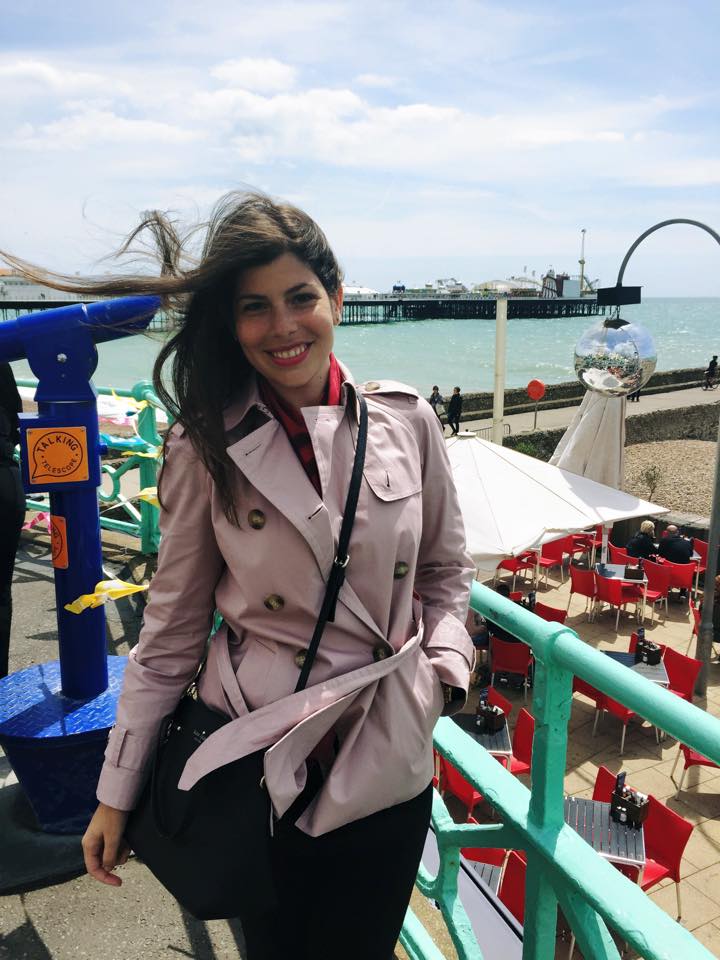
Of course being in London also gave me the opportunity to explore the amazing city and nearby countries with friends and classmates. When I wasn’t interning, I found myself exploring Bath, Oxford, Stonehedge, Brighton, Paris, Brussels, Geneva, and Prague.

11393043_10153917547268047_6452430665447608477_n

I can’t help but already begin to reminisce about my summer experience. It provided me with endless opportunities to learn and explore. If I can recommend one thing to students, is to take a leap to study or work abroad for the summer – you won’t ever regret it!

Melissa