
Sociable person and social responsibility

Jason Lu,TriSight Contributor

I’m turning 24 Tuesday. As of a twelve-year cycle, it’s my zodiac year of birth again. At this age, most of my peers back in China are stepping into the career life for the first or second year. Getting rid of the immature self in campus, many are forcing themselves to fit in the workplace for such a big role transition. I’ve heard that one alumna of my high school resigned from a top-tier consulting company after one year’s work, due to poor personal relation with her supervisor.

It’s true that interpersonal communication is important in our everyday life, especially for the professional one. Chinese universities, except for the business schools, barely have any career related social events for undergraduates to get in touch with industry leaders. A born sociable person, or an experienced trainee, will stand out in job performance. It’s not just about interacting with other people, but responding with the society, which is typically made up of human relation.

Though we are now in a stage of advocating gender equality, given the circumstance where I grew up with, males are more intentionally taught about the behavior in social occasions, even for a young boy. More social responsibility has burdened urban men. One example of my personal experience, especially during teenage time, is about the table manners. Since my father has considered me as a half-grownup, he started to teach me about how to engage in dialogue with elders and frequently encouraged me to propose a toast in the presence of everyone. I was quite embarrassed then, didn’t see it useful for my adolescence. Every time when I stood up and squeezed words from my mouth was a big torture.

After years of touch with people on campus, at workplace, or in the society, I’ve gradually realized the practice during my rebellious age has made me a more sociable person, I’m always intrigued in participating social activities. Walking out of my comfort zone has actually challenged my limit. Now I understand my father, this custom reflects his social responsibility as a father to educate his son. And it’s my turn to pass on the communication, a huge task for a 24-year-old guy.

5 REASONS GRADUATE SCHOOL IS THE ABSOLUTE WORST

 Jenna Perlmutter,TriSight Contributor

Picture1

  1. IT’S BASICALLY LIKE RELIVING YOUR COLLEGE DAYS EXCEPT IN A FIELD YOU ACTUALLY CARE ABOUT
    Grad school cuts right to the chase. You’re not required to take the ‘fluff’ GenEd classes you had to take in your undergrad. Instead, your program offers classes that are in the realm of your interests. Yes, there is plenty of homework and readings but it’s not nearly as dreadful as
    undergrad because you’re mastering the skills in a field that you’re passionate about. You’re paying to learn about a topic from esteemed professionals that genuinely want you to succeed.


  1. YOU CAN PROLONG DECIDING WHAT YOU WANT TO DO WITH YOUR LIFE
    Whoever graduates from college knowing exactly what they want to do in their life cannot be trusted. Sure, there are many exciting jobs and opportunities out there but it takes working for a few different jobs to truly learn what you do and
    don’t enjoy doing. Grad school prolongs that looming pressure you feel post grad when your family asks what you’re doing with your life. It’s also a wonderful time to take advantage of the classes your university offers that you didn’t have time to take in your undergrad.


  1. YOU SOCIAL CIRCLE EXPANDS
    Let’s be honest. College was a great time to dabble in clubs, intramurals, Greek Life and socialize in class. But six months
    post grad, you’re likely only keeping in touch with a handful of people, which is totally okay because those are the friends you foresee in your wedding one day. In grad school, you’re surrounded by like-minded individuals that are also willing to put the time in to become successful. Your classmates understand all too well the challenges of balancing a busy schedule and the daily contemplation of going to bed by 9p.m.


  1. GRADES DON’T MATTER
    Unless you plan on continuing your education to earn a
    PhD, grades in graduate school don’t really matter. Don’t get me wrong, it’s important to at least maintain the university’s minimum GPA requirement, but it’s more important to focus on getting to know your classmates and networking with your professors. The post-grad job market is highly competitive and employers are not interested in the GPA you maintained throughout graduate school. You probably heard it all the time in your undergrad, but network, network and network. Your professors are well connected in the industry and are likely to connect you with the right people.


  1. YOU’RE INVESTING IN YOUR FUTURE
    While your friends are busy working full-time and earning a steady salary, you’re dedicated to being a student. Some students procure internships or part-time jobs during their program while others commit to being full-time students. Either way, it’s nearly impossible to work a full-time job and you can feel like you’re “behind” compared to your friends that have a regular paycheck coming in. However, investing a few short years to earning a master’s degree sets you up for success for the rest of your life. Upon matriculation, your degree sets you apart in the job market and you always have an advanced degree to fall back on. Not to mention a strong alumni network for life. 

Lessons Learned in My First Year of PR School

Lessons Learned in My First Year of PR School

Daisy O’Neill, TriSight Contributor

I came to USC Annenberg’s School of Communication and Journalism with limited experience in communication or journalism.  In fact, my undergrad major at The University of Missouri was textile and apparel management, which had little to do with communication and a lot to do with clothes, retailers, and fabrics.  I’ve learned everything I now know about PR in the past year, all thanks to the admission board at Annenberg that took a chance on a fashion student.  My first year living in Los Angeles has provided me with plenty of learning experiences, from where to find the nearest green juice to how to navigate the 405 for minimal traffic.  Most importantly though, I’ve learned the foundational skills needed to become an effective PR practitioner.  Some have been more straightforward than others, but understanding all are equally as important to my career path and personal growth.  Here are the most significant things I’ve learned throughout my PR journey.

First, you have to talk the talk.  This applies to several fields, but networking is what really will get you places in the PR world.  Fostering and sustaining relationships is how people transition from positions, learn about opportunities and stay relevant in the business.  An adjunct professor at USC and trailblazer in the industry, Jess Weiner, says “relationships are the currency of business” and I think there is major truth to that.  At both Mizzou and USC, I’ve had opportunities to meet professionals in different industries at countless networking events.  Through attending several of them, I’ve actually found that I’m more successful making these personal connections in more organic ways while meeting people as I go about my day.  Regardless, choose whatever method works best for you and go for it.  Don’t be afraid of the awkwardness, rather, embrace it and let it help you make money moves!

It’s not all glam events and high-profile guestlists.  Sometimes it is! But sometimes it’s not.  What initially attracted me to the PR world was the events side of the business.  As someone who was studying the fashion industry and has always been a big follower of pop culture and lifestyle trends, I always wanted to be inside the exclusive and glitzy parties and shows.  However, though I’ve worked events like that in my short PR career, the majority of public relations is in the day-to-day communications and reputation management of a brand.  I’ve learned that events are incredibly large and detailed tasks that take tons of planning, negotiating, and physical labor.  It wasn’t until I was thrown into the mix, working actual events for brands, that I quickly realized the mental and physical exhaustion that would come with working them – whether it was for 10 or 200 people.  Definitely seize any possibility to get in those events, but make sure you’re prepared for the actual hard work required to put on the program.

Spelling and grammar – it really is important.  We all say we know how important spelling and grammar is, but… do we really?  My first semester at USC, while taking a PR writing class, I was introduced to the level of writing and editing that is expected of communications and journalism students.  There’s a whole set of special rules for those working in communication, called AP style.  It took me a whole semester to learn the very basics of AP style – only scratching its surface.  And no, I definitely have no shame in still referencing my textbook.  At one of my internships, as a media relations intern at BLAZE PR, I was introduced to “The Dirty Towel” analogy.  Picture yourself walking into a super swanky, 5-star hotel.  You’re amazed by the hotel’s beauty, cleanliness, and friendly staff.  You’re shown to your room, where you have an amazing view, full bar, and comfy bed – but then you head to the bathroom.  A used towel is hidden in the corner.  You know it was probably just overlooked by the cleaning service, but it makes you start to question the rest of the hotel.  You think to yourself, “well maybe the view isn’t that great… and the sheets are probably not washed properly… and the front desk worker wasn’t really that accommodating…”  After you see that small mistake, you start negatively viewing other aspects of the hotel until you maybe have convinced yourself that it’s not a good hotel.  The same thing can happen when a client sees your PR work with a small spelling or grammar error – they’re expecting the absolute best and then spot that mistake and start questioning the rest of your work.  Maybe you’ve lost their trust and appear careless, so they decide not to renew their contract.  This may seem a bit dramatic, but it really matters, so it’s best to just take the time to learn AP style and triple check your work, always!

The future of PR is changing.  Public relations, I’ve learned, is becoming more integrated into marketing.  The differentiation of the two is cloudy and unclear as it is.  Though this may seem like a bummer, it really gives PR practitioners an opportunity to step up their communications game and stand out.  The pressure is on us to embrace teamwork with marketing experts, but also to highlight the difference in power between the work of marketing and public relations teams.  The PR industry is extremely dynamic and always changing with consumer habits, so it’s important to stay creative and curious.  Building on those curiosities can lead to great ideas!

In our current political and social landscape, which can be unsettling and uncomfortable, it’s so important to spend your time with something you are curious and excited about.  My curiosity is the reason I’m a student at USC and writing this very blog!  I decided to build on my passions for fashion, pop culture, and lifestyle trends, and explore more career opportunities with areas for personal and professional growth.  Though I’m still using my time as a student to explore my niche in the PR world, the skills that I’ve learned in my first year as a grad student are crucial to my future anywhere I land.  They’ve been key to my success in achieving my goals up to this point and can only continue to help me later on in my career or personal life.
Make Political PR Great Again

Bridget Winstead, Account Manager


ff

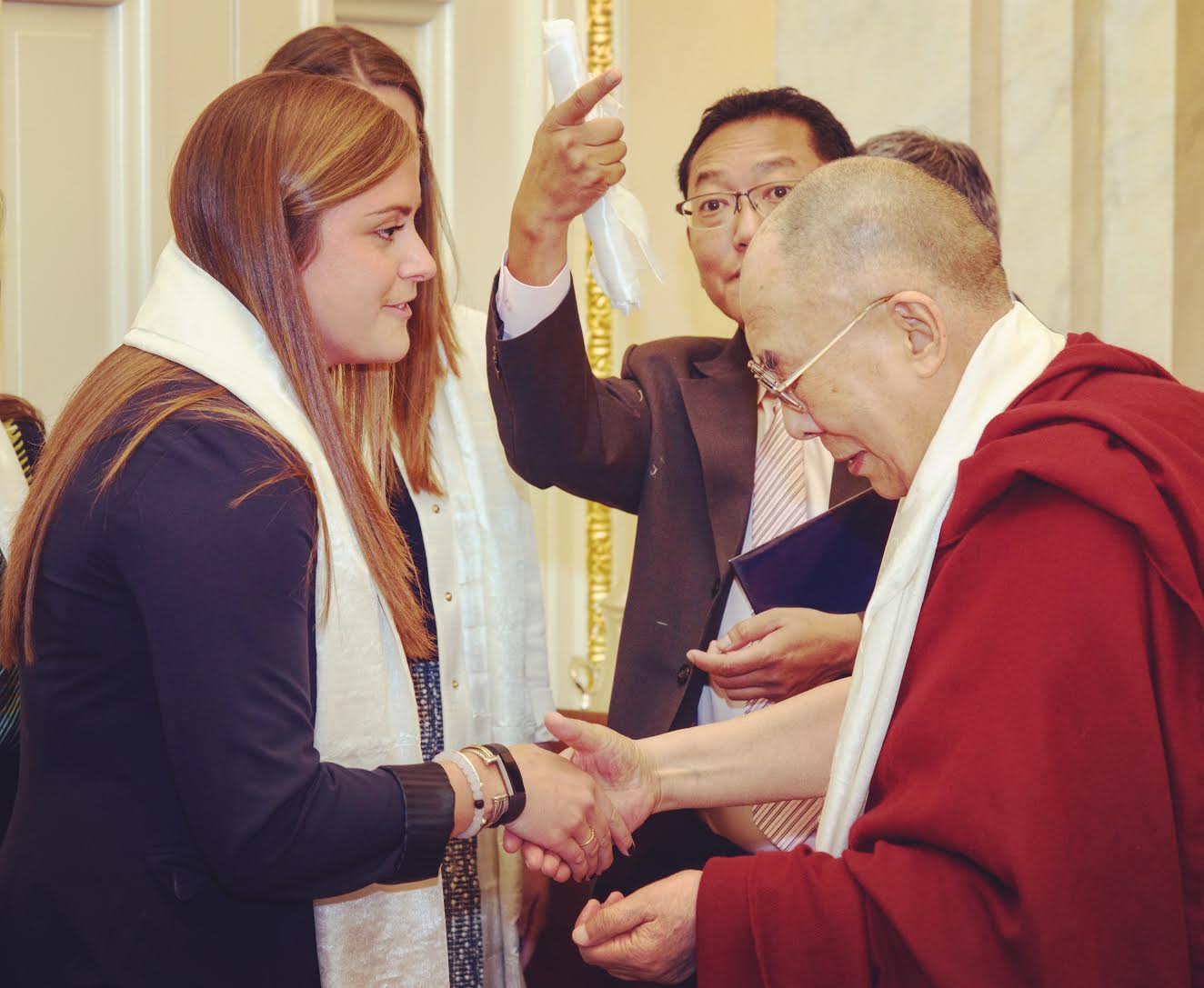
It’s April in D.C. The weather is unexpectedly mild. A big guest is on his way to the Capitol today, and everyone is in a tizzy. The Dalai Lama is scheduled to arrive precisely at noon for a meeting with the nineteen senators on the Foreign Relations Committee. The Dalai Lama plans to discuss both his exile from China and efforts in Tibet. A mob of international correspondents begins to congregate outside of the Foreign Relations Committee room on the first floor of the Capitol – eagerly awaiting His Holiness. Then there is me. I am a protocol assistant for the Committee who happened to help with the logistics of the Dalai Lama’s visit. I soon realize the significance of my exposure. I am right at the intersection of political discourse and public relations. This is the moment when I first realized that public relations really is a core pillar in the political sphere. The Dalai Lama was meeting with these senators to convince them to support his efforts and ideas, take action on those efforts and ideas, and – finally – to make changes that would benefit him and his people. The lines are blurred between political discourse and public relations – and I saw that fusion firsthand.

Awareness, education and persuasion are three important aspects of successful politics that are public relations centric. Whether it’s running for office or lobbying for a bill or policy, awareness is absolutely vital for conviction. Who will vote for you if they don’t know who you are and what you stand for? Which lawmakers will vote on behalf of a bill if they do not know how it will impact their constituency or core platform? The public relations aspect of awareness brings political entities and policies to light.

Education is the next necessary public relations tenant in politics. Awareness is the starting point, but education is where the real work gets done. The vernacular has to be digestible to the appropriate audiences and clearly understood. Politics can be messy, so putting confusing concepts into easy-to-understand terms makes things easier for everyone. Empathy through education could also possibly lead to more support of the candidate or effort you are fighting for.

Lastly, persuasion. The audience has been made of aware of your political efforts and has been educated on your candidate or cause, but now they need to be convinced that what matters to you also matters to them. Delivery and authenticity are vital components of persuasion. Most politicians do not have training in those fields; this is where public relations comes in. For candidates, public-speaking skills must be sharpened with tempo training, body language adjustments, and presentation practice. For policy, priorities need to be clearly articulated to the audience, and efficiency is vital. Why should this policy matter to them? Why should they vote for this candidate over another? If you are successful in persuasion, you (or your client) will ultimately accomplish your goals.

Although not always recognized, the practice of public relations is used for successful political campaigns. My transition from Washington, D.C. to Los Angeles has showed me that public relations is transferable to a myriad of professions – especially politics. Now – more than ever – the reputation of Washington has been tainted. Politicians need more help now than ever from public relations professionals to clean up their acts and hold themselves accountable. So, future public relations professionals… if politics makes you tick (like it does for me)… in the words of Uncle Sam, “We want you!”

To Specialize or Not to Specialize? That is the Question.

Sue-Mae Watt, Account Manager 


careerpath

The PR industry is currently in the midst of change, which is great for our profession! Who knows what new challenges and innovations this transformation will bring. For those of us who are currently studying PR, or considering studying PR, even working in the PR industry, it leaves us with the question — will the skills and knowledge I have and the ones I’ve still yet to learn, will they be relevant in this new day and age?

With most of my SPR cohort finishing up our first-year, we were faced with a decision of whether we want to be generalists or specialists. To be honest, a vast majority of us thought that after doing a year of core units, we would know. For some, they figured it out. But for a many others, they were still left grappling with the idea of which direction to take their PR careers.

For me, I had already spent 3.5 years in the PR industry in Australia and had a double major in Public Relations and Journalism. I considered myself a generalist – I had an array of skills and knowledge in many different facets of PR. It was only when I re-evaluated where I wanted to be in the next 10 years of my career did I decide I wanted to specialize. It was a no-brainer for me to move to Los Angeles, undertake the SPR program and specialize in business and corporate communications.

I know, for others in my cohort, the decision wasn’t as simple as it was for me. Some people had no PR experience, some had come into the program straight out of undergrad, some had experience in the communications field and others, like me, went back to school to after working for a few years. We are all in different situations, but here’s my advice to help you decide if you want to be a generalist or a specialist:

  1. Find your footing first — If you had asked me fresh out of college where I wanted my career to go, I would have had no idea. Working for a few years gave me time to figure out what my strengths and weaknesses were, and what I liked and disliked. Figure what you’re good at and not so good before deciding.
  2. Find out if you have a particular interest in an area — If you know exactly what you want to be doing in the future, by all means, specialize. For those who don’t, consider what sectors and areas interest you. Do some research and see if there is an alternate path for you.
  3. By research, I don’t just mean Google — Don’t be afraid to discuss career options with your professors. If you want to find out more about a certain sector, they’ll happily point you in the right direction. Attend networking events and interning are also great ways to get a feel of the work involved.

It may be a daunting process deciding on your next step, but no matter what you chose, the future of PR is bringing new and exciting things to head.