Two Easy Career Tips for College Students

Tess Meyers, Account Manager


Stepping into the working world can feel like a daunting task for students, but it doesn’t have to be. Being a student, you have many opportunities to take positive first steps in towards your career goals. Here are two ways to stand out when trying to get your foot in the door:

  1. Use Social Media Positively

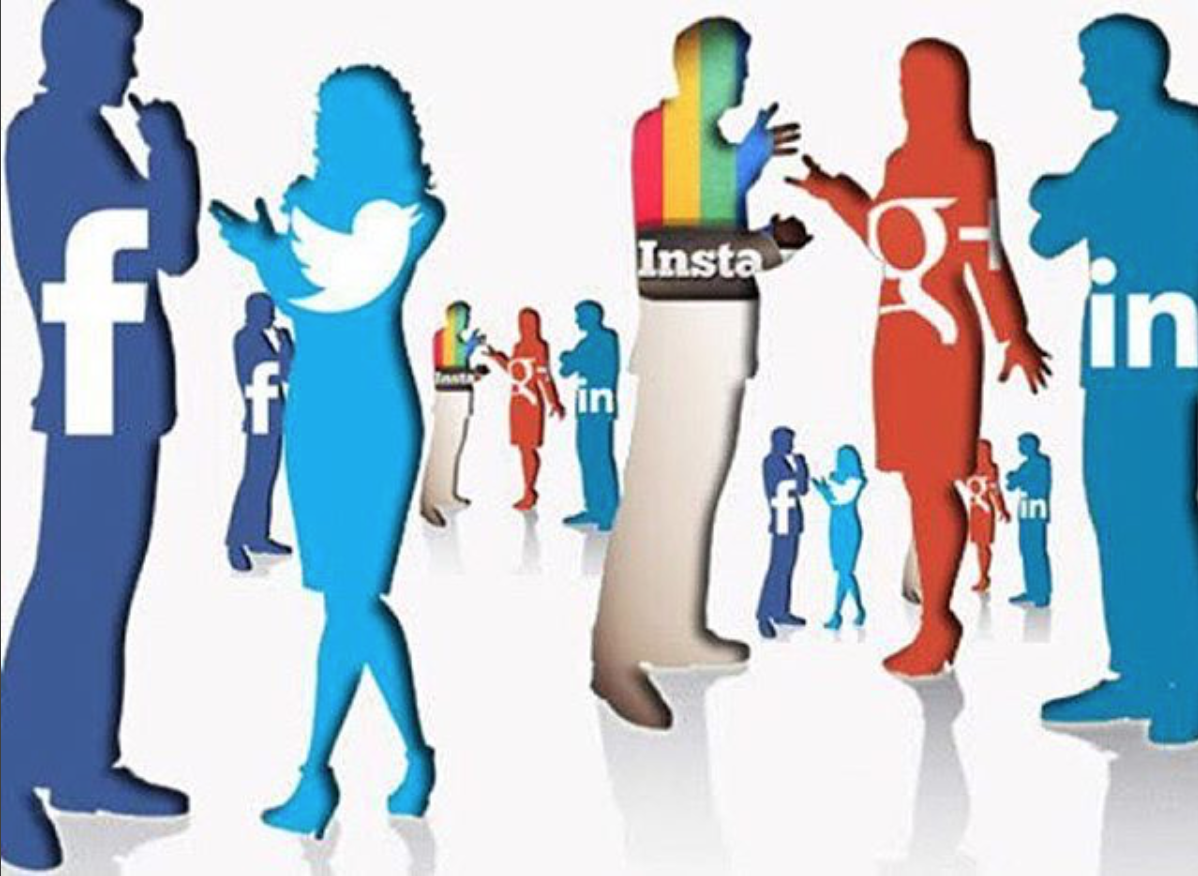
Social Network Social Media People Meeting Teamwork Concept Your social media presence can make or break a job opportunity – especially in the media field. An employer won’t want you to speak for their brand if you can’t  present yourself in a positive light. Be sure to post any potentially scandalous ideas on private – or better yet – don’t post at all. A tweet may only take a second to send, but everything lasts forever on the internet. However, especially in PR, social media is a necessity.  Instead of neglecting it, use it to show off your interests and accomplishments. Sending out lighthearted tweets, links to blog posts, or even retweeting industry influencers are all great ways to show your personality to those recruiters who do sneak a peek.

  1. Make connections

Your time as a student at USC, or any university, is invaluable. Not only are you surrounded by leaders in your respective fields, but you’re surrounded by future colleagues. Who says informational interviews are only for potential employers? If you meet a fellow Trojan who had an awesome internship or is interested in following a similar career track, as them to coffee or lunch. At the very least, you’ll learn something new about them, or about a potential opportunity. Who knows – you may meet your future business partner or mentor. Joining professional organizations, like TriSight, is a great way to make connections and gain experience as a student, too!

Taking ownership of where you are now and doing “little” things like managing your social media presence and building relationships with professors, peers and colleagues won’t just help you in your initial internship and job search, but will benefit you through out your career.


Looking Beyond Trends: Considerations When Formulating A Social Media Strategy

Stephany Rodas, Collective Avenue Account Manager


onesizefitsall

In this currently evolving digital age, it is very easy for us to jump to the immediate conclusion of incorporating a social media strategy for all campaigns. But the truth of the matter is, a social media strategy is not effective for every campaign.

There are numerous things to consider when developing a social media strategy, or any kind of strategy for that matter. Below are a few:

  • Target audience (i.e. Millennials 18-34, children 7-12 years old, adults 35-50)
  • Habits of your target audience (i.e. Millennials are avid consumers of content digitally while older audiences tend to rely on traditional methods such as television or print for information)
  • Range of your campaign (is it a national campaign with a goal to attract as many Millennials as possible, or is it a local campaign designed to get particular groups of people within a certain district involved)

While there are many other factors to take into consideration, one thing is for sure, you cannot make a generalized assumption based off what you hear in the media or in your current surroundings, without doing the proper research. By implementing a social media strategy without research or evidence to verify that your audience engages with social media, you are making an assumption that all individuals within that population have access to technology with digital capabilities. Many folks tend to forget that many communities across the United States and, even more so, globally do not have equal access to technology. While urban areas are in the era of smartphones, laptops and tablets, many other countries and communities within the United States are still utilizing flip phones and relying on traditional media such as print, radio and broadcast to receive information. This disparity in access to technology can result from a number of things including socioeconomic status or location.

This does not, however, mean that communities with lower socioeconomic status or who live in urban/rural areas do not utilize social media or lack access to it entirely. The complete opposite could be true. Ultimately, there is only one way to find out and that is through research. Moral of the story: never make assumptions and pursue a trend because it’s popular. One size does not fit all.

The Importance of Words in Public Relations

Caroline Galbreath, Director of Outreach


keywords-digital-marketing-hospital-marketingOften times I sit and twirl my fingers for hours thinking about what to write and how to start a writing assignment—we call this “writer’s block.” Writer’s block is every writer’s worst enemy. But what is it that makes it so difficult to start writing? We are too focused on trying to use sophisticated vocabulary in our writing to make it sound more intelligent, powerful and mature. Instead, we need to avoid unnecessary jargon and concentrate on using simple, basic words that will appeal to the target audience. After Donald Trump’s inauguration, there were hundreds of thousands of individuals who marched across cities to share a common message of woman empowerment. However, many of the posters failed to spread this intended message because of a difficulty to understand the words scribed on the posters. Words such as “Intersectionality” and “xenophobia”. Since the goal of Public Relations writing is to garner as much publicity as possible and amplify a message to a particular audience, in this case, it would be significantly more effective to use words that are known and used by all ages of the general public.

It is important to concentrate on using words that are applicable to your entire target audience. If you look at Donald Trump and Hillary Clinton’s campaign slogans, you may be able to recognize a potential reason for why Trump’s slogan stuck with so many more people than Clinton’s did by evaluating the choice of words in each slogan: #ImWithHer and #MakeAmericaGreatAgain. Hillary Clinton’s slogan only applies to the candidate; some might say that they couldn’t agree with or associate with the slogan “#ImWithHer” because they were on the fence, and therefore they weren’t entirely “With Her”. On the other hand, Trump’s slogan applies to a general belief that Americans hold to make their country great again. Choosing the right words matters. To find better words, ask yourself if the words you are using are understandable to your target audience, if they create some sort of emotional bond to your message, and if they can apply to the entire target audience.

The Importance of Social Media Sites in Public Relations

Hinde Kast, Director of Events


Screen Shot 2017-03-09 at 11.07.05 AMThe public relations industry is constantly changing. In this changing world, it is important that as communicators we are always on the lookout for the next great thing that will take the world by storm.  Did you know, according to a study done by the Pew Research Center in 2015, that 65 percent of American adults use social networking sites?

With such a large part of the American population, as well as the global population, being active on social networking sites, as a company is unbelievably important for communication practitioners to reach out to various organizations through these mediums. Back in 2004, there was no such thing as Facebook. Our population was entranced by Myspace and its insane customization skills and businesses never utilized it for advertisement. Now, no one knows what MySpace is, Facebook is worth $387 billion and social networking sites are tools that are expected to be used by businesses. As our technology advances, so will the platforms that can be used on them. Adaptation is so important in our field. Yes, we need to understand what technological platforms are popular amongst the population now, but it is crucial that we stay updated regarding up and coming platforms as well. In public relations, lack of adaptation is truly dangerous.

However, it is also important to understand when certain social networking sites are trending and when they are failing. Based off the status of a social media site or technological platform, more or less time should be focused towards that medium. For example, look at Twitter. Twitter used to be one of the biggest social media platforms that not only the public used, but businesses did as well. Now Twitters stocks is plummeting, and less and less people are engaged on the platform. Yet, so many businesses and organizations are paying money to advertise its products and businesses on this platform. Sadly, this effort may lead to disappointing results. It is important to learn to tell what platforms are worth spending time on and the ones that are not. Learn. Adapt. Think outside of the box.

So, what’s going to be the next thing big thing and will you recognize and utilize its power?

What the Heck is PR?

Lisa Curiel Parker, Deputy Managing Director

pr-quote-bill-gates


This is going to upset some people but public relations is the art of b*** s***. Time and time again people ask: What is public relations? What is communication? Well, it’s almost everything you see, listen and hear. Unless you live under a rock you’re surrounded by mass amounts of information being consistently spewed at you.

Receiving a Bachelor’s in Communication and eventually a Master’s in Strategic Public Relations I grasp the importance of both fields. To break it down simply, communication is apprehending the art of seeing, listening and hearing everything around you. Fathoming how individuals communicate, why they do and its affect on others. Say, if you go on a date with someone who shifts their eyes everywhere but yours, communication theory helps one understand why the date is so horrendous – there is a lack of proper communication occurring between the two of you. In a professional setting, it’s studied by observing leaders and work environments. What’s the proper lighting for highest productivity of employees? What proper tone of voice should I speak to a co-worker? What ways can I relate to a customer to sell a product? Studying communication assists individuals understand these key factors in everyday life.

Public relations on the other hand, uses these theories and creates something out of them. Implementing marketing campaigns, writing press releases and creating websites is just a small fraction of PR’s totality. Every successful company uses PR to explain to their customers why they are the best choice, a political campaign uses it to convince constituents why their candidate should win and individuals use it to put their best face forward in everyday life. PR practitioners are jacks(or janes)-of-all-trades. To be effective, we must have a creative eye to create beautiful things, a business skill set to speak to future partners and a strategic mind to out-think competitors.

So, the next time someone asks you what public relations is you can tell them exactly what it is.